
Mahesh Bhatt's son Rahul talks about his famous father who was never around, and other details of his association with the LeT operative David Headley.
The mysterious Major Iqbal, who India suspects is a Pakistani army officer in the Inter-Services Intelligence, has now been identified as Chaudhery Khan by Mumbai terror accused David Headley. Headley also confirmed that Khan was the mastermind of the 26/11 attacks.

Here are the highlights from the Lashkar terrorist's deposition on Day 4.

Pakistani-American David Coleman Headley, a Lashkar-e-Tayiba operative charged with conspiring in the 26/11 Mumbai terror strike, will plead guilty before a United States court on Thursday, five months after he was arrested by the Federal Bureau of Investigation.
International pressure in the aftermath of the Mumbai attacks led Lashkar-e-Tayiba to abandon its plan to attack a Danish newspaper in retaliation to the publication of a cartoon of Prophet Mohammed, David Coleman Headley told a court on Wednesday.

A multi-agency team has gone to the US and all paperwork and legal issues are being completed with US authorities to bring him to India, they said.
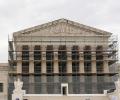
The US Supreme Court has denied the application of Tahawwur Rana, a Canadian national of Pakistani origin accused in the 2008 Mumbai terror attacks, seeking a stay on his extradition to India. Rana, currently detained in Los Angeles, had submitted the application after Associate Justice Elena Kagan initially denied it. Despite a renewed appeal, the Supreme Court ultimately rejected the request.

Senior advocate Dayan Krishnan, who led India's arguments for the extradition of 26/11 accused Tahawwur Rana in a United States court, is set to lead the National Investigation Agency's (NIA) prosecution in Delhi.

Former Home Minister P Chidambaram said the government of India would not file formal charges against Pakistani-American terrorist David Headley until Ajmal Kasab's trial was over. Vicky Nanjappa reports

Hafiz Saeed, chief of Jamaat-ud-Dawa, the fountain head of terror groups including Lashkar-e-Tayiba, continued to financially support the perpetrators of 26/11 Mumbai attacks even after the incident in 2008.

India has sought access to Lashkar-e-Tayiba operative David Headley, the Mumbai terror attack convict now lodged in a US prison, as it insisted on bringing to justice the perpetrators of the 26/11 assault.
As it seeks the extradition of Pakistani-American terrorist David Headley from the United States, India has stressed on the need for the two sides to commit to the goal of assisting each other in the pursuit of justice.
The 7/11 train bombings case has taken another twist with one of its accused quoting David Headley and seeking a fresh probe by the National Investigation Agency. Ehtesham Qutubuddin Siddiqui, one of the accused in the case says that there is a new dimension to the case ever since Headley revealed that this attack was planned in Karachi and had Pakistani links.
The detention hearing of terror suspect David Coleman Headley, arrested by the Federal Bureau of Ivestigation for plotting attacks in India at the behest of the Lashkar-e-Tayiba, scheduled for December 4 at a court in Chicago has been indefinitely deferred.
The key to the conspiracy hatched by David Headley and Tahawwur Rana may lie in Bangladesh and Pakistan.
The Centre has warned five states, including Uttarakhand and Maharashtra, against terrorist attacks, particularly targeting military training academies.
The Inter Services Intelligence was heavily involved in preparations for the Mumbai terror attacks, according to classified Indian government documents obtained by The Guardian newspaper
The United States on Tuesday said bringing to justice the perpetrators of 26/11 was still an "unfinished business" which was high on its priority list, days after Pakistani American Lashkar-e-Tayiba terrorist David Headley was sentenced to 35 years in jail by a Chicago court.
The four member National Investigative Agency team has concluded questioning of Mumbai terror suspect David Coleman Headley and has headed back home, Indian Ambassador to the US Meera Shankar said on Thursday.
Law enforcement sources rubbished allegations that Headley was a double agent for US intelligence and that this was why he was not being made available for interrogation by Indian intelligence.

A total of nine terror sites in Pakistan, including five in Pojk, linked to Lashkar-e-Taiba (Let) and Jaish-e-Mohammed (Jem), were targeted with meticulous planning to avoid civilian casualties.
Rediff.com brings you for the second in the series of leaked Wiki cables, which point towards some startling revelations.

The 64-year-old Pakistani-origin Canadian businessman would also be questioned on his suspected links with the officials of Pakistan spy agency Inter-Services Intelligence (ISI) and his association with terror group Lashkar-e-Taiba (LeT), which had orchestrated the attacks.
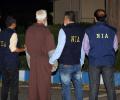
'It is ensured that no adversaries or people who oppose Tahawwur Rana's philosophy are housed in the same ward or jail.' 'Additionally, it is ensured that he does not have any prior contacts within that jail.' 'So, the lodgment of such a high-profile prisoner is done very carefully.'
The defence for Tahawwur Rana, co-accused with David Headley in the 26/11 attacks, rested its case in Chicago after calling two witnesses but the Pakistani Canadian himself did not testify.
Apparently gloating over the mayhem the Pakistani attackers were creating in Mumbai, Tahawwur Rana, a co-accused had proposed that nine of the ten Lashkar-e-Tayiba militants who carried out the carnage should be decorated with Pakistan's highest military award, Nishan-e-Haider.
Visiting Indian External Affairs minister SM Krishna has said the recent statements made by David Headley, one of the prime accused in the Mumbai 26/11 terror attack, are being keenly followed and assessed by New Delhi for its import in the larger context.
The family of Ishrat Jahan, the teenage from Mumbra near Mumbai who was killed in an encounter along with three other alleged terrorists have dismissed the news report attributed to National Intelligence Agency which claimed that Ishrat was a Lashkar-e-Tayiba operative.

The plea sought a direction to close criminal proceedings and action taken in FIRs lodged by the Central Bureau of Investigation against the Gujarat Police personnel and others, saying it was unconstitutional within the judicial facts and evidences of Headley.
Ever since Headley was arrested in US, there has been a lot of talk regarding the Karachi Project, considered to be one of the most ambitious projects staged by the ISI where it plans to combine Pakistani forces and home-grown terrorists to launch a spate of terror attacks on India, reports Vicky Nanjappa.
The government on Thursday said documents related to the Lashkar-e-Tayiba operative David Coleman Headley's visa were yet to be traced while those of his associate Tahawwur Rana had been found, contradicting claims by Indian Consulate in Chicago that no papers had gone missing.
Rahul Bhatt, son of Bollywood film director Mahesh Bhatt, was questioned by investigators to probe his association with suspected Lashkar terrorist David Headley during the Pakistani-American terror suspect's stay in Mumbai.
Sheela Bhatt reveals the inside story on the Federal Bureau of Investigation's revelations to India on the Headley-Rana case, and of how the findings have changed the 26/11 investigation in India.
A court in New Delhi has sent Tahawwur Hussain Rana, the mastermind behind the 2008 Mumbai terror attacks, to 18 days of National Investigation Agency (NIA) custody. The court cited the need for sustained interrogation to uncover the extent of the conspiracy and the involvement of multiple targets across India, including New Delhi. Rana, a Pakistani-origin Canadian businessman and close associate of 26/11 conspirator David Coleman Headley, was extradited to India after the US Supreme Court dismissed his review plea against his extradition.
The handler of American-born Lashkar-e-Tayiba terrorist David Headley carried out reconnaissance in New Delhi when he came to the national capital in 2005 on the pretext of watching a Indo-Pak cricket match, according to an investigation report.

Pakistani-American terrorist David Headley, convicted in the US for his role in the 26/11 Mumbai attacks, on Thursday told a court in Mumbai that terror outfit Lashkar-e-Tayiba wanted to eliminate Bal Thackeray but the person who was assigned the job to kill the late Shiv Sena chief was arrested.
A video of the Federal Bureau of Investigation interrogation of Tahawwur Rana, a key suspect in the Mumbai attacks, has been screened for the first time by the prosecution in his trial at a court in Chicago, in which he is shown talking about Pakistan's Inter-Services Intelligence giving weapons to co-accused David Headley.
Samraz, the wife of Mumbai attacks co-accused Tahawwur Rana, said on Tuesday that India was her second home and there was no reason her husband would have planned to attack that country.
The Mumbai attack trial in a United States court resumed on Tuesday with co-accused David Headley testifying that Al Qaeda leader Ilyas Kashmiri had a plan to kill CEO of Lockheed Martin in frustration over drone attacks along the Af-Pak border.
The imminent trial of Pakistan-born Canadian citizen Tahawwur Rana, co-accused with David Headley in the 2008 Mumbai terror attacks, could reveal Inter Services Intelligence's links to terrorists, according to a news report.
